Grand Junction Industrial Power vs. RV Generators: Rental Scope & Limitations
Grand Valley Generator Rental in Grand Junction, CO, specializes in industrial generators 20kW and above, tailored for commercial sites like Mesa County Fairgrounds and post-2000 developments. We do not provide portable RV or camping generators. Serving neighborhoods such as Downtown, Lincoln Park, and the CMU Area, we understand local power needs amid Grand Junction’s unique climate and infrastructure.
Why Your Construction Site Needs More Than an RV Generator
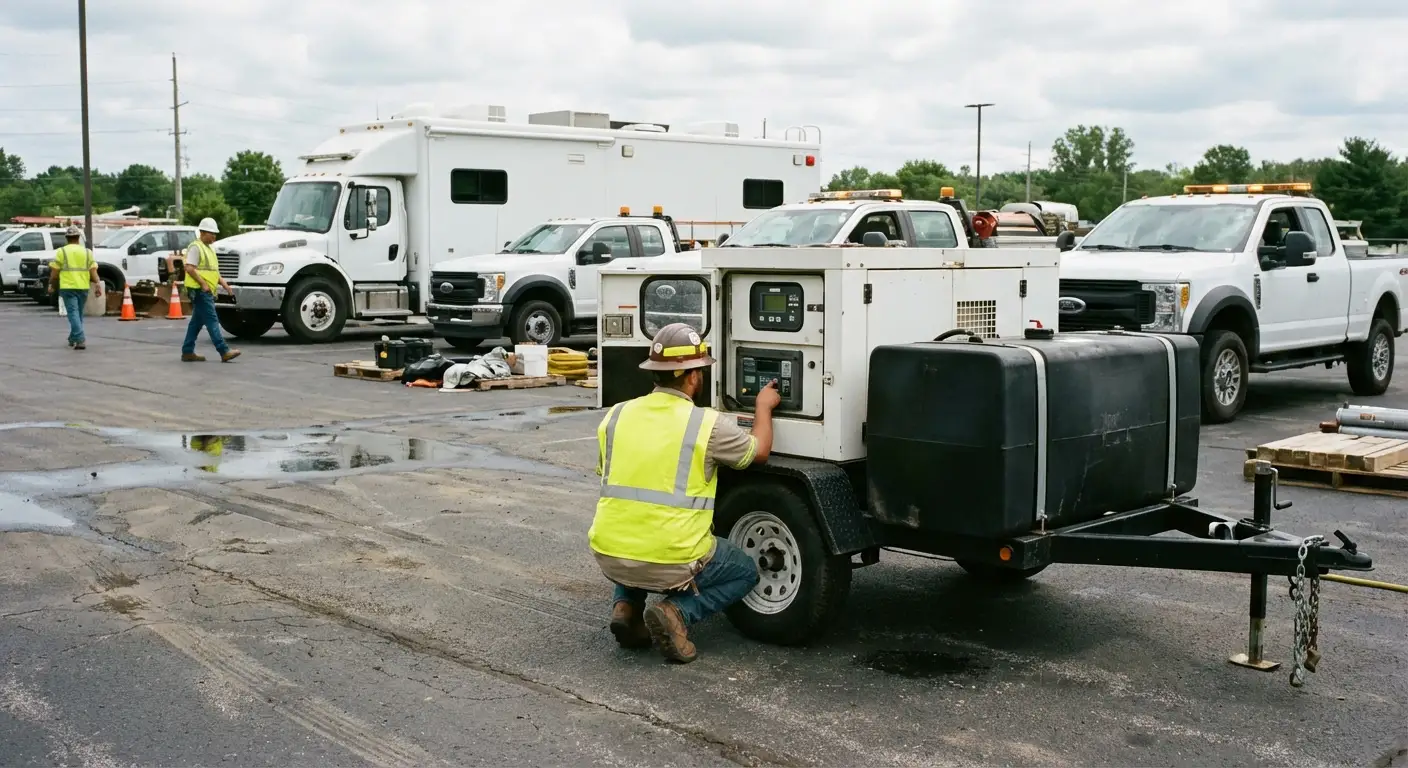
We learned the hard way during that 2007 downtown blackout - recreational generators just don't cut it for industrial work. Last summer, a contractor in Sherwood Park tried running their cement mixer off an RV unit. Burned out the alternator before lunch. Our construction prime power units near CMU Area handle 3-phase loads that'd fry recreational equipment. The difference comes down to copper windings, hydraulic cooling systems, and Tier 4 emissions controls you won't find on campground models.
Technical Distinction Checklist
- Industrial generators handle heavy-duty loads that RV units can't sustain
- RV generators lack the fuel efficiency needed for extended commercial use
- Our distribution equipment is built for industrial sites, not campgrounds
- You'll need sound-attenuated models for downtown job sites
- OSHA temp power standards don't apply to recreational vehicles
Technical Distinctions in Power Rental Applications
Grand Valley Generator Rental provides technical guidance on selecting appropriate power sources for industrial or recreational use.
| Service Scope | Reason for Exclusion | Alternative Recommendation |
|---|---|---|
| Phase Configuration | Industrial equipment requires three-phase power while RV units operate exclusively on single-phase circuits. | Verify phase requirements before rental. |
| Load Capacity | Industrial generators support heavy motor starts that overwhelm standard portable RV power modules. | Calculate peak amperage requirements first. |
| Fuel Delivery | Large-scale units utilize diesel or natural gas whereas RV generators rely on gasoline. | Match fuel type to site. |
| Site Integration | Industrial setups involve hardwired distribution panels while RV units use standard plug-in connections. | Assess electrical connection hardware needs. |
| Noise Mitigation | Industrial enclosures meet specific OSHA decibel standards unlike open-frame portable RV generator models. | Check local noise ordinances strictly. |
Industrial Power Solutions for Grand Junction Worksites
Reliable generator rentals serving Western Colorado construction and remote industrial projects
Industrial Power vs. RV Generators: Rental Scope & Limitations
Comparing industrial and RV generators helps you choose the right power rental in Grand Junction.
Temporary Power for Events near the Museum of the West
Emergency Backup in Lincoln Park Residential Areas
Industrial Power vs. RV Generators: Where the Line Gets Drawn
When the lights go out, we get you back on. Fast. We size the rental for the load, set it up with the right distribution, and keep the scope honest so you’re not forcing RV gear into industrial work.
We’ve learned in the field that the difference between RV power and industrial rental power shows up fast, especially after storms or during a planned shutdown. An RV unit might keep a trailer lit, but it doesn’t belong on a commercial job with motors, HVAC, and safety-critical circuits. We inspect the load, the site, and the weather, then we match the equipment to what the building actually needs. That approach keeps the setup practical, safe, and ready for real work.
-
Real World Example
After that 2007 hailstorm, we walked a damaged Main Street job where a small office had tried to run critical loads off an RV unit. The panel kept tripping once printers, lights, and HVAC all came on together.
Industrial power handles real commercial load, RV generators don’t.
We size industrial rentals for startup surge, continuous duty, and the ugly mix of motor loads that show up in shops, offices, and events. An RV generator fits a camper’s limited circuits, but it won’t hold up when a building asks for more than a few small loads at once. That’s why we look at the actual equipment first, then match the generator to the job instead of guessing. -
Real World Example
In the CMU Area, we’ve set rentals for temporary office trailers and campus-adjacent work zones where crews needed quiet, stable power near foot traffic and late-day activity.
Placement and site conditions matter as much as the generator itself.
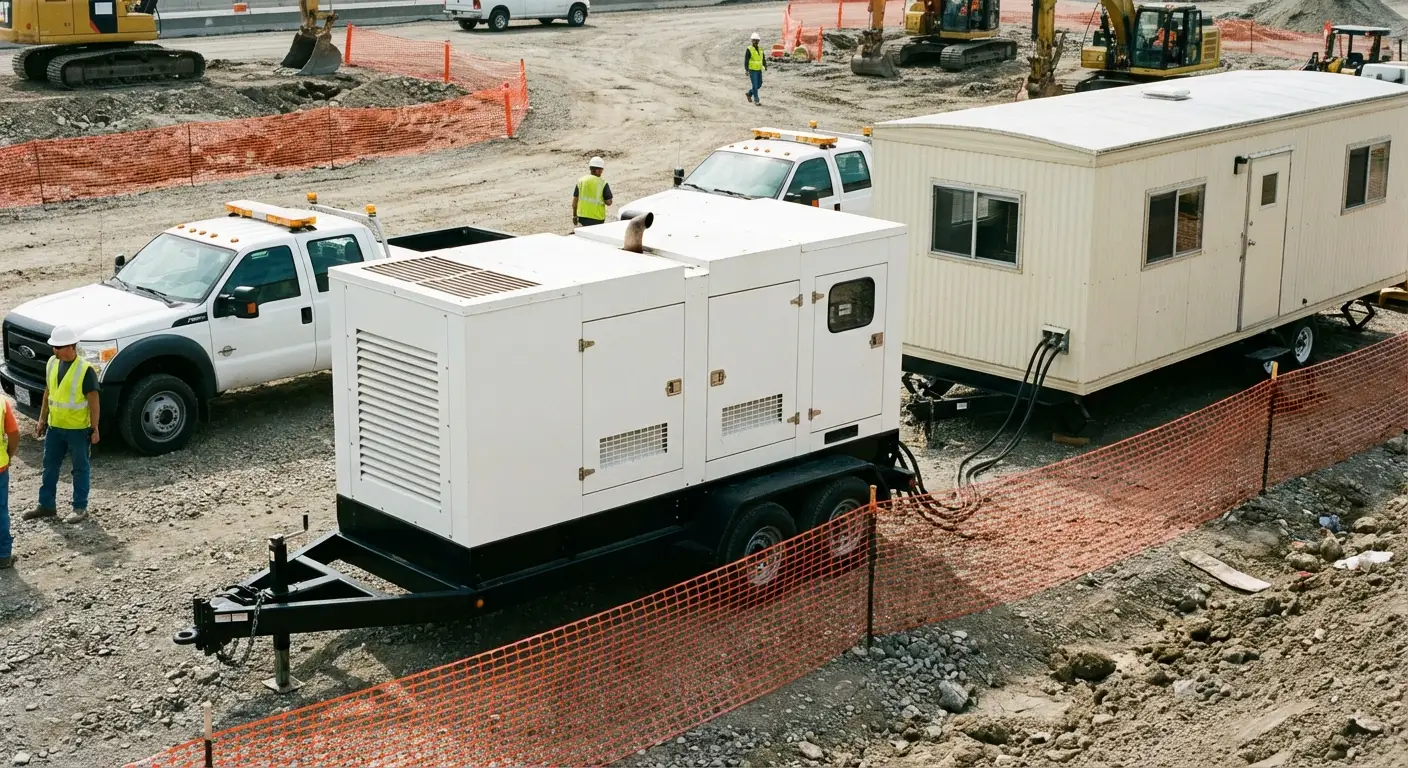
Industrial sets need room for service access, safe exhaust routing, cable runs, and fuel handling. We plan around curbs, traffic lanes, and weather exposure because Grand Junction wind can turn a sloppy setup into a problem fast. RV-style equipment usually lacks the cabling, distribution, and protection we need for a controlled commercial installation. -
Real World Example
During a shutdown near Suplizio Field, our crew used distribution gear, cable ramps, and a sound-attenuated industrial unit so the venue loads stayed steady while people moved through the area.
Commercial rentals include the support gear that makes power usable.
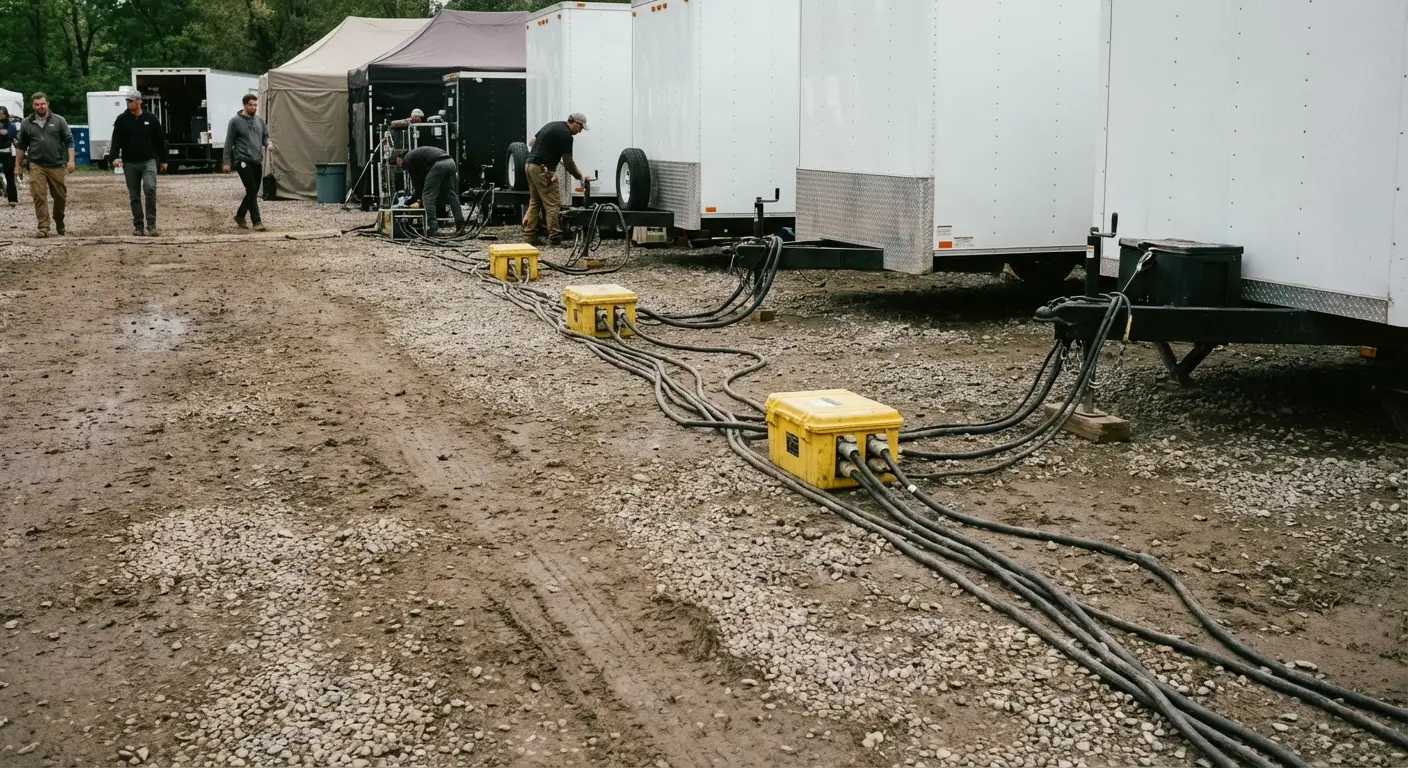
A generator by itself doesn’t solve much. We bring distribution panels, proper cables, and safety hardware so the power gets where it needs to go without improvising with adapters and extension cords. That matters in Downtown / Main Street, Sherwood Park, and other tight sites where crews need clean routing and fewer trip hazards. -
Real World Example
On a wet spring morning in Grand Junction, we’ve seen owners ask if an RV unit can back up a small storefront. Once we review transfer equipment, start currents, and runtime, the gap between consumer-style and industrial rental gear gets obvious.
The rental scope has to match the risk, runtime, and compliance burden.
Industrial rentals fit emergency standby, planned shutdowns, and prime power work because they’re built for longer duty cycles and tougher oversight. We also think about OSHA temp power practices, EPA Tier 4 expectations, and noise limits before the first cable lands. That’s how we keep the job practical instead of just powered.
Industrial Power Demands: Beyond RV Generator Capabilities
When businesses in the CMU Area or Downtown Main Street need reliable power, RV generators simply won't cut it. Our industrial generators deliver consistent, high-capacity electricity for complex operations. We've seen construction sites and event spaces require robust prime power solutions that lightweight recreational units cannot handle. Our electrical distribution systems ensure precise power management, with automatic transfer switches that guarantee uninterrupted performance.
System Requirements & Specifications
- Verify power requirements for industrial vs RV applications
- Assess generator capacity for specific project needs
- Confirm electrical load compatibility
- Evaluate fuel consumption and runtime expectations
Industrial Power vs. RV Generators: Rental Scope & Limitations — Part 2
Grand Junction rental questions on RV and industrial generators, with practical limits for Lincoln Park, Sherwood Park, CMU Area, and Las Colonias Park.
What separates industrial power rental from RV generator rental in Grand Junction?
Why are RV generators a poor fit for site power in Sherwood Park?
What load types push a project toward industrial generators?
Are RV generators acceptable for indoor or enclosed use?
What rental limits matter with industrial generators?
When does an RV generator make sense on a project?
Compare Industrial Power and RV Generator Rental Limitations
Understand rental scopes and limitations for industrial power versus RV generators in Grand Junction, CO. Ensure compliance with OSHA and EPA standards.
Serving Grand Junction with OSHA and EPA compliant rentals